Fathom vs Notion meeting recorder: workflow + consent guide
Compare Fathom vs Notion meeting recorder to choose the right workflow. Review capture methods, accuracy, sharing, and a consent checklist to decide fast.
If you need highest-accuracy meeting notes (high transcription accuracy, strong summaries, and reliable action item extraction) and you’re fine with a dedicated meeting-notetaker workflow, Fathom is usually the better choice.
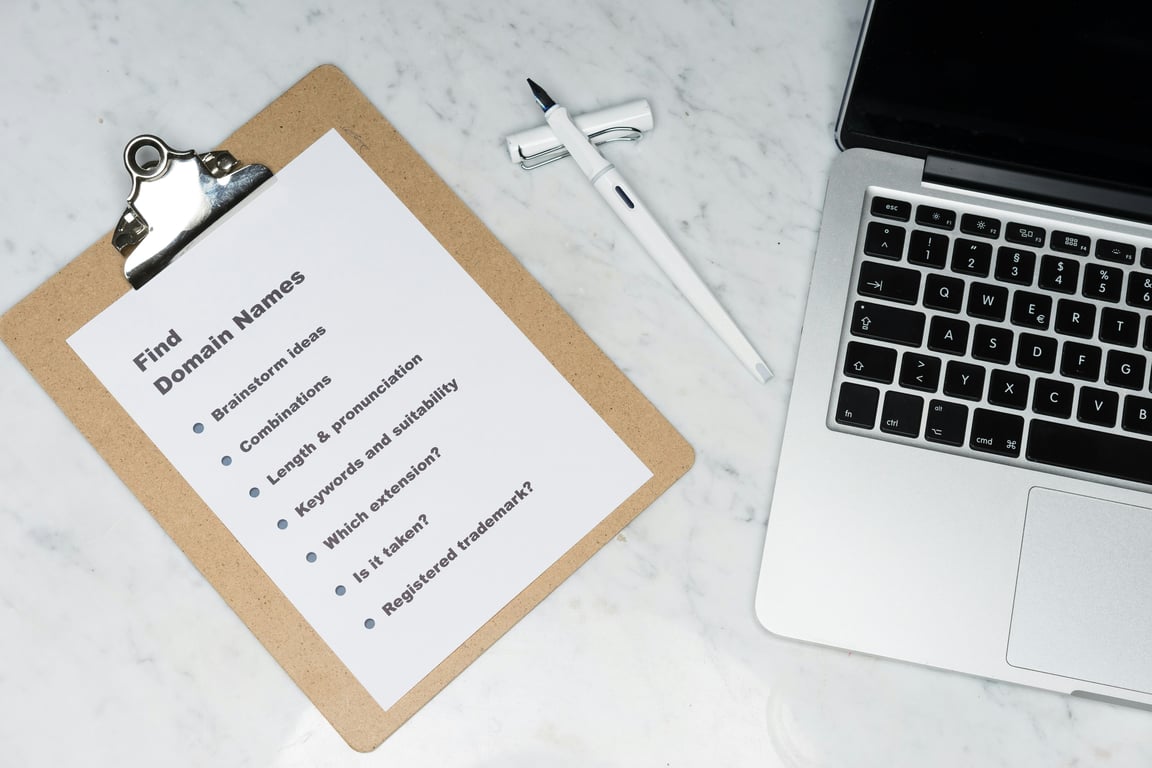
Choosing between a Notion meeting recorder workflow and Fathom. Photo by Jens Lelie on Unsplash
If you want meeting notes to live inside your operating system (tasks, projects, docs) and you’re optimizing for “capture → organize → ship work” in one place, Notion’s AI Meeting Notes / recorder workflow is usually the better choice — especially when you already run your team in Notion.
Quick comparison: Fathom vs Notion meeting recorder
1) How audio gets captured (passive vs “join the call”)
Fathom: Can capture notes with or without a bot joining the call (including “bot‑free” modes). This can feel more “passive” to attendees and can be useful in scenarios where adding a bot is awkward.
Notion: Records system audio locally, so it can capture Zoom/Meet/Teams audio without a meeting bot. In practice, this behaves like a desktop recorder: you start it from Notion and it listens to your device audio.
Why this matters: If your team frequently records external calls and wants the least friction/least disruption to the call experience, the capture method is often the deciding factor.
2) Transcription quality + speaker handling
Fathom: Known for strong transcription quality and clean summaries.
Notion: Strong for “good enough” meeting capture inside your workspace; speaker labeling can depend on what the recorder can actually detect from local audio and the meeting platform.
Rule of thumb: If you’re using transcripts as a source of truth for sales/CS, you’ll care more about accuracy and speaker attribution. If you’re using transcripts mostly to generate next steps and preserve context, you may care more about where the output lands (inside Notion).
3) Action items and follow‑ups (extraction vs execution)
Fathom: Great at producing action items and highlights right after the call.
Notion: The advantage is downstream execution: you can turn action items into database tasks, project updates, SOP changes, or client deliverables without leaving the tool.
Ask yourself: Do you want a tool that’s excellent at producing outputs, or one that’s excellent at turning those outputs into work?
4) Sharing, permissions, and “who sees what”
Fathom: Many teams share summaries/highlights out to attendees; this is convenient but can create accidental oversharing if your defaults aren’t configured carefully.
Notion: Sharing is governed by Notion page/database permissions. This can be safer for internal workflows, but requires you to set up your workspace permissions intentionally.
The compliance section (don’t skip this)
Recording consent rules vary by country and, in the US, by state. Many states are “one‑party consent,” but some require “all‑party consent” (often called “two‑party consent”). When you’re recording calls across state lines (or internationally), the safest operational approach is to get consent from everyone on the call.
A simple, low‑risk consent workflow
Pre‑call notice in the calendar invite or email (one sentence).
Verbal notice at the start of the call: “I’d like to record this to capture accurate notes — is everyone okay with that?”
Opt‑out path: “If not, we won’t record; we’ll take manual notes.”
Decision tree (pick the right tool fast)
Do you need the best transcription and summary quality possible?
Yes → lean Fathom
No / “good enough” is fine → go to #2
Do you want meeting notes to become tasks/docs inside your workspace with minimal copy/paste?
Yes → lean Notion
No → go to #3
Are bots joining calls a problem for your customers/partners (trust, IT policy, awkwardness)?
Yes → choose the tool/workflow that supports bot‑free capture most reliably in your environment
No → either can work; decide based on your team’s existing stack
Checklist for evaluating any meeting recorder (use this in 10 minutes)
Capture method: bot joins vs system audio vs mic-only; does it work for your call types (Zoom/Meet/Teams/phone/WhatsApp)?
Transcription accuracy: test with accents, crosstalk, and poor audio.
Speaker attribution: can it tell who said what (and is that essential for your use case)?
Action items: does it extract tasks consistently, or do you still rewrite them?
Searchability: can you quickly find a moment, a decision, or a customer quote later?
Integrations: CRM logging, Notion tasks, project updates, Slack sharing — whatever “done” means for your team.
Permission defaults: who can access recordings and summaries, by default?
Compliance: do you have a consistent consent script and retention policy?
Not sure which fits your team?
Tool comparisons only get you so far — the right choice depends on what your team is already doing and where the friction actually lives.
Book a ZoomFlow session and we’ll walk through your specific case in 30 minutes. If a recommendation is obvious, you’ll have it before the call ends.
Build a Notion meeting notes database that auto-summarizes and extracts next steps with AI autofill, then surface the right meetings anywhere using linked views.