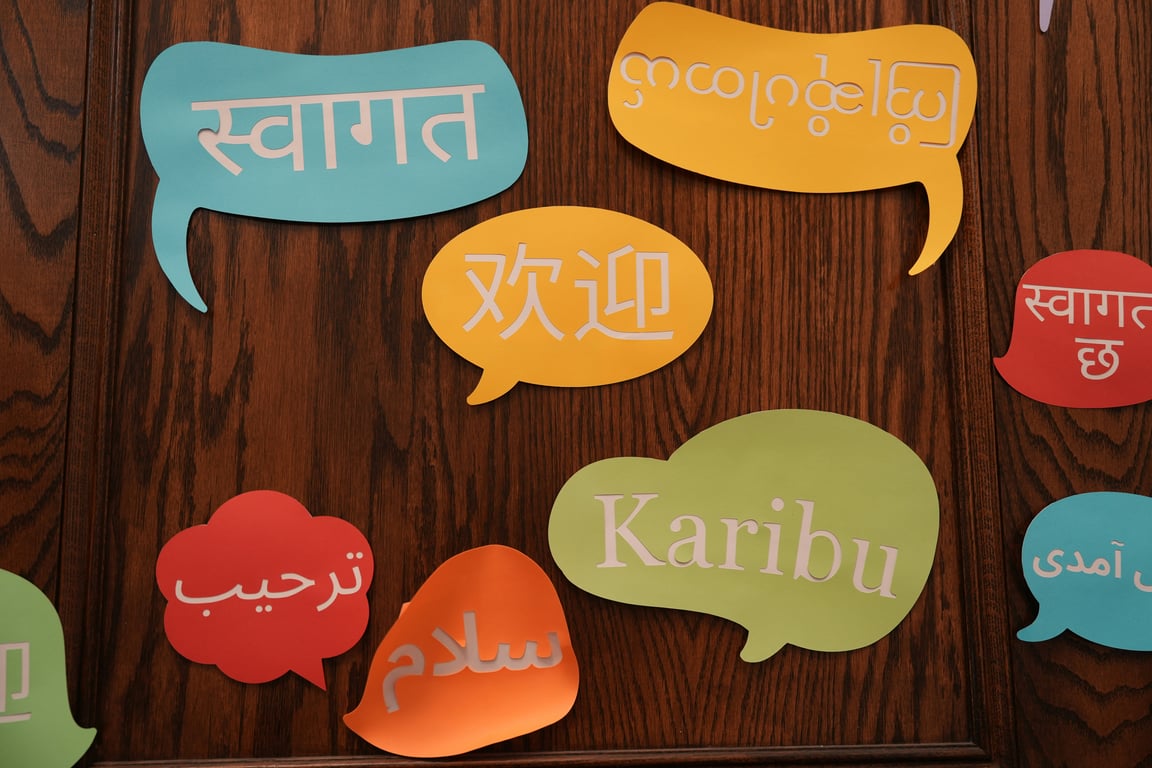
A nonprofit running around-the-clock interpretation services in 200+ languages was coordinating linguist assignments, client invoicing, and payment tracking across disconnected tools. Work orders slipped. Payments lagged. The team had no reliable way to tell which interpreter had which job — or whether the client had been billed. This is how they fixed it.
The Problem
Running a language access organization means managing two populations at once: the clients (hospitals, legal aid societies, government agencies) who need interpretation or translation on short notice, and the linguist network — 200+ interpreters and translators spread across time zones — who fulfill that work.
The nonprofit had both, and no reliable system to connect them. Project intake came through a mix of email, form submissions, and phone calls. Assignment was tracked in spreadsheets. Payment to linguists and invoicing to clients happened in QuickBooks, but the link between “job completed” and “invoice generated” was manual — meaning it required someone to remember to do it.
As the organization scaled, the gaps widened. Screening records for new linguists sat in a separate form and had to be manually associated with the right linguist profile. There was no self-service portal where a linguist could log in and see their assignments. Project managers couldn't quickly view what was outstanding, what was paid, or what was overdue — at least not without pulling from three different places.
The root issue wasn't a lack of good people. It was a lack of a system that could match the complexity and pace of 24/7 language access work.
What the Connex Team Found
When a Connex consultant first sat down with the operations lead, the engagement started as a general Airtable support relationship. Within a few sessions, the scope became clear: this wasn't a tooling question. It was an architecture question.
Three structural gaps kept coming up:
No single source of truth for project status — intake, assignment, completion, and payment lived in different tools with no automated handoff between them.
Linguist records weren't reliably linked to their screening and payment information, creating orphaned records and data integrity issues.
There was no client- or linguist-facing portal, so all communication about job status went through staff, manually.
A fourth gap emerged later in the engagement: QuickBooks invoicing automation that had been working correctly broke silently when a QuickBooks app update split a combined function into two — changing the data structure the automation expected. Invoices stopped generating, and the team didn't catch it immediately.
What Was Built
1. A Central Airtable Base for Translation Operations
The team built a centralized Airtable base that became the operational backbone: project intake, linguist assignment, job tracking, document management, and status tracking all live there now. Every project moves through a defined workflow — from initial request to linguist match to delivery to billing — with visibility at each step.
2. Self-Service Portals for Linguists and Project Managers
Using Softr.io, the team created two portals drawing from the same Airtable data: one for linguists (to see their assigned work, submit deliverables, and track payment status) and one for project managers (to view outstanding work, approve submissions, and trigger billing). This eliminated the manual back-and-forth that had been eating into staff time.
3. Automated Form-to-Record Linking via Fillout + Zapier
Linguist onboarding required screening forms and payment setup — but those submissions weren't reliably linking to the right Airtable record. The fix involved understanding how Fillout creates subform records (immediately on submit, before full form completion) and building compensating logic to handle incomplete submissions. A cleanup automation now runs automatically to remove orphaned screening and payment records that didn't complete, keeping the base clean without manual intervention.
4. Invoicing Automation via QuickBooks + Airtable
Airtable now tracks what has been billed, to whom, and for what. Zapier automation connects job completion in Airtable to invoice creation in QuickBooks — so a completed project triggers a draft invoice without anyone manually initiating it. When a QuickBooks app update broke this automation (by splitting a combined function into two separate API calls), the Connex team identified the root cause — missing line items in the data processing step — and fixed it within a single session.
Estimated Impact
⚠️
These figures are estimates derived from documented session data, booking history, and client-reported context — not audited financials.
The organization has run approximately 198 consulting sessions across a two-year engagement, purchasing 94 hours in bulk (at nonprofit-discounted rates) while the Connex team contributed additional free hours supporting the mission.
Staff time recovered (estimated): Coordinating linguist assignments, chasing payment records, and manually initiating invoices was consuming staff bandwidth across operations and finance. Automating these handoffs is estimated to recover 3–5 hours per week of staff time — roughly 150–250 hours per year — that has been redirected to client-facing and mission-critical work. Basis: extrapolated from session notes describing manual processes replaced.
Invoicing lag reduced: Before automation, invoices required manual initiation after job completion. The average delay is estimated at 3–7 days. Automated triggering eliminates this lag, improving cash flow timing for an organization running on restricted grant budgets.
Data integrity: The cleanup automation for orphaned records prevents compounding errors in the linguist database — errors that would otherwise require manual reconciliation sessions. The team identified and addressed at least one systematic data integrity failure during this engagement (incomplete subform records creating phantom entries).
Operational scale: The portal system means the linguist network (200+ interpreters) can self-serve their job status and payment information without routing every question through staff. This supports scale without proportional headcount growth.
Where They Are Now
The organization now operates with a single source of truth for their language services workflow. New projects enter through intake forms, route to available linguists automatically based on availability and language pair, and trigger billing when complete — without staff manually managing each handoff.
The 97% session happiness rate across 120+ feedback data points reflects a long-term, trust-based engagement rather than a one-time build. When the QuickBooks automation broke due to a third-party app update — the kind of thing that can stay broken for weeks if no one notices — the relationship meant the team caught it in the next session and resolved it the same day.
Ongoing: The team has identified a GUI-based project handover flow as the next build — a feature that would allow project managers to hand work between team members without requiring direct system access. That scoping was captured in a recent session as a distinct future engagement.
What Made This Work
Starting with architecture, not tools: The first question wasn't "how do we use Airtable better" — it was "what does this data need to do, and who needs to see it." That framing drove the portal decision and the invoicing automation design.
Long-term, iterative engagement: A system this interconnected doesn't get built in one session. The nonprofit relationship spanned two years of weekly development calls. Each session built on the last.
Defensive automation design: The cleanup automation for orphaned records was built not because the team expected failures, but because Fillout's subform mechanics create a predictable failure mode. Anticipating that saved future reconciliation work.
Catching third-party breakage: The QuickBooks incident is a good example of what ongoing support relationships provide — a consistent set of eyes on a system when external vendors make breaking changes.
Could This Apply to Your Organization?
If your team coordinates work across a distributed network — contractors, volunteers, interpreters, field staff — and the coordination still runs through email threads and spreadsheets, the gap between where you are and where this nonprofit landed is probably smaller than it looks. The tools exist. The architecture just needs to be built.
Connex works with nonprofits and service organizations building exactly this kind of operational infrastructure. If you’re carrying the same coordination weight, book a free consultation to talk through what a system like this would look like for your context.
A NYC performing arts nonprofit was running its operation across 10+ disconnected tools. Here's how they automated proposals, invoicing, and client intake.
A US process-server firm re-entered every job into three systems by hand. Two Zaps fixed it: ServManager to QuickBooks invoices and bills, automatically.