Notion database entries missing? Check filters first
Notion database entries “missing”? It’s often a view filter or permission issue. Here’s how to find hidden records, remove filters, and confirm access.
If your Notion database entries look “deleted” or “missing,” don’t panic. In most cases, the records still exist — a view filter, “assigned to me” setting, or permission change is hiding them.
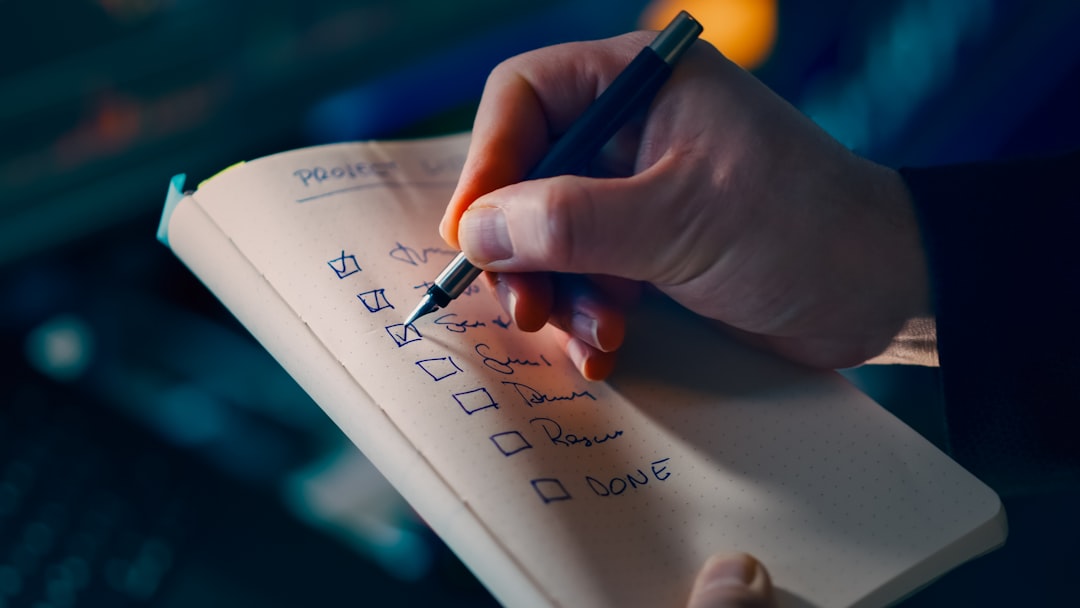
Photo by Jakub Żerdzicki on Unsplash
The fastest way to confirm the entries still exist
Start by proving whether the pages are actually gone or just not visible in the current view:
Open the database as a full page (not just a linked view in a dashboard).
Switch to a different view (or create a temporary “All items” view).
Use database search (the search bar at the top of the database) to look for a page title you remember.
If you can find the page via search but not in your view, you’re dealing with filters/sorts/grouping — not deletion.
Step 1: Check for hidden filters (especially person filters)
The #1 cause of “missing” items is an active filter — often one that was set accidentally.
Common culprits:
Person filters like “Assignee is Me” or “Created by is Me”
A filter set to one specific teammate
A filter that depends on a property that changed (status renamed, checkbox flipped, date moved)
What to do:
Open the view’s Filter menu.
Temporarily remove filters one-by-one until the missing items reappear.
If the database has a person property, confirm it isn’t filtering to a specific person.
Tip: If you’re troubleshooting with a client team, ask them to check whether the filter icon shows someone else’s name — that’s a strong signal a view was saved with the wrong person filter.
Step 2: Check view grouping and sorting (items can be “there,” just not where you expect)
Sometimes the items aren’t filtered out — they’re just buried.
Look for these patterns:
Grouped by Status, but the “hidden” items are sitting in a status group you haven’t expanded
Sorted by Last edited time or Created time, so older items appear far down the list
A board view grouped by Assignee, where your items are in another person’s lane
To quickly sanity-check:
Remove grouping.
Remove sorting.
Switch to a plain table view.
Step 3: Confirm you actually have access to those pages
If entries truly disappear only for certain people (or only after someone is removed/re-added), check permissions.
What to verify:
The user is still a member/guest with access to the page/database
The database isn’t inside a page they can’t access
The database view isn’t being shown inside a page with more restrictive sharing
If your team relies on Notion for ops tracking, it’s worth documenting a simple “permission audit” checklist so you can resolve this fast the next time it happens.
Step 4: Check Trash — but don’t treat “nothing in Trash” as proof
If you suspect deletion, check Trash — but keep in mind:
If items were never deleted, they won’t be there.
If someone deleted and then restored items, it may look like the issue “fixed itself.”
If you’re on a plan with limited history retention, you may not be able to confirm older changes in detail.
When to contact Notion support
Contact Notion support when you’ve confirmed all of these:
No filter/group/sort is hiding the items
The user has correct permissions
The items are not in Trash
The pages cannot be found via database search
At that point, you have enough evidence to describe the issue clearly and get a real investigation started.
A simple prevention rule: keep an “All items (no filters)” view
If your database matters (finance, CRM, content pipeline, onboarding), keep one view that is intentionally boring:
No filters
No grouping
Minimal sorting
Then lock the database views to reduce accidental edits.
Get help with your Notion setup
Missing records usually point to a filter or permission issue — but figuring out exactly where it broke, and making sure it doesn't happen again, usually takes longer than it should.
If you'd rather have a Connex consultant walk through your database setup with you, book a ZoomFlow session — we'll find the issue and show you how to lock it down so it doesn't come back.
How a small nonprofit fixed a Classy-to-Bloomerang Zapier sync that silently dropped gifts: ACH re-checks, retry handling, review queues, and event data.
Model vendor units and conversion factors, preserve issued PO prices, and calculate BOM costs without losing precision or rewriting purchasing history.