AI Training Boot Camp for Teams: 2-Day Workshop to Become AI Native
A 2-day hands-on AI training boot camp for operations, sales, and marketing teams. Build real AI workflows, not just AI knowledge. Run remote or in-person.
Most teams do not need another AI course. Teams need a focused, hands-on AI training boot camp that turns real work into repeatable workflows.
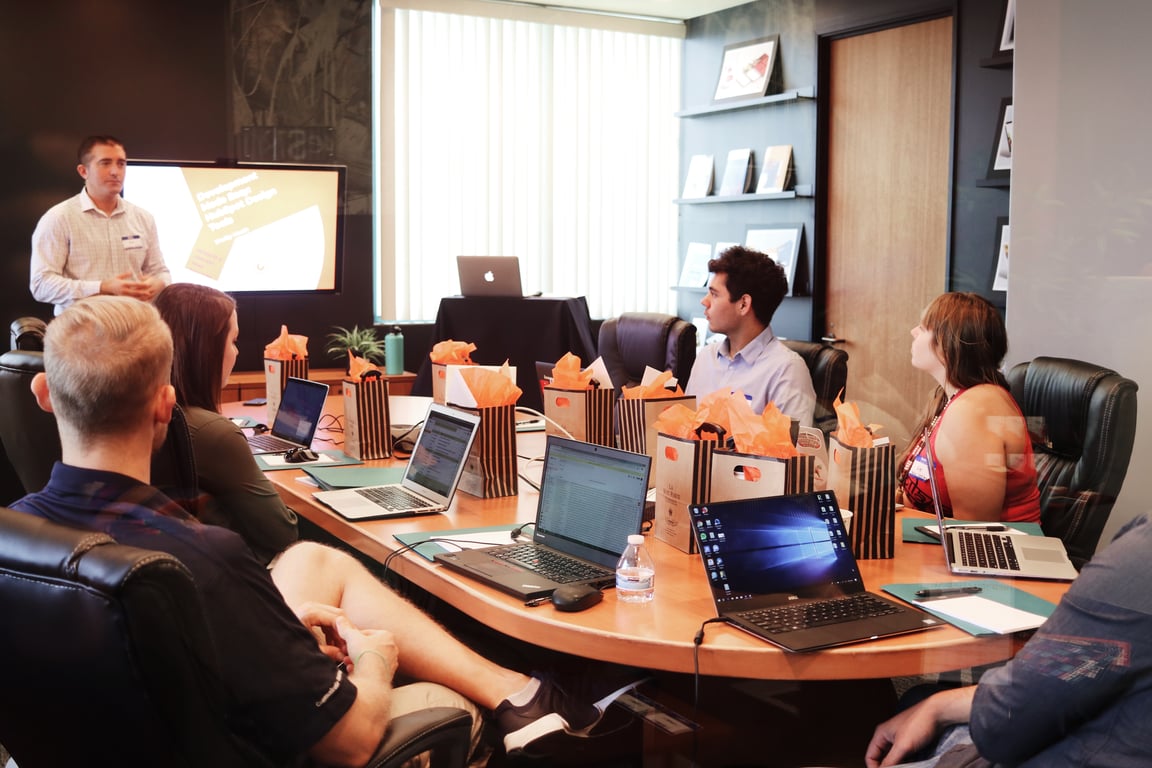
Photo by Campaign Creators on Unsplash
This 2-day boot camp is designed to help your team become AI native by implementing practical workflows, starting with deterministic automations and layering in AI agents where they actually make sense.
What is an AI training boot camp for teams?
An AI training boot camp for teams is a short, intensive workshop where your team learns AI by building production-ready workflows on your real tools and real processes. Unlike a generic course, a boot camp includes implementation time, review cycles, and an operating model so AI adoption sticks after the workshop.
In 2 days, your team should leave with:
A shared “AI native” playbook for how work gets done
A prioritized list of the highest-ROI workflows to automate
A working intake and triage system for email and chat requests
A meeting-notes-to-content pipeline
Clear governance, quality checks, and handoff rules
Who this boot camp is for
This format works best for teams that:
Have high message volume across email and chat
Spend time re-copying information between tools
Lose action items after meetings
Want to move fast, but need guardrails
Common participants:
Operations
Sales operations
Marketing operations
Client services
Executive assistants
Founders and department leads
The 2-day workshop format (remote or in-person)
This is a practical boot camp, not a lecture. Every block includes build time, review, and documentation.
Day 0 (prep, async)
Before the live sessions, we do a short setup and intake so Day 1 starts with real inputs.
Access and permissions check
Identify 3 to 5 workflows to implement
Collect examples of “good” and “bad” requests
Define routing rules and ownership
Day 1: Build the foundations (deterministic first)
1) Your “AI native” operating model
We define what “AI native” means for your team, clearly and in your own terms.
Where AI is allowed to make decisions
Where AI must only draft and a person must approve
What data is safe to use
What “done” looks like (speed, accuracy, consistency)
2) Intake and triage for email and chat
Most teams drown because requests arrive in too many places.
We build a single intake layer that turns messy inbound messages into clean, trackable work.
We implement fast, reliable automations that remove manual work.
Create tasks from inbound requests
Auto-assign based on category, client, or channel
Enforce required fields
Notify the right person only
The goal is to get immediate ROI before adding agentic layers.
Day 2: Add AI agents safely (agentic second)
4) Agent-assisted triage and drafting
We add AI where it improves speed without breaking trust.
Examples:
Summarize long requests
Extract structured fields
Draft replies for approval
Suggest next steps based on your playbook
5) Meeting notes → content pipeline
If your team talks to customers, leads, or internal stakeholders, you already have content.
We implement a pipeline that turns meetings into usable content:
Summaries for internal stakeholders
Action items
Draft internal docs
Draft marketing content when appropriate
6) QA and guardrails
An AI native team needs quality control that scales.
We define:
Confidence thresholds (when to auto-send vs. require approval)
Audit logs and review queues
“Stop” conditions (when AI should refuse or escalate)
Deliverables (what you get at the end)
You leave with real workflows, not just ideas.
A documented AI operating model
A unified intake workflow for email and chat
3 to 5 implemented automations
1 to 2 agent-assisted workflows with QA rules
A rollout plan for the next 30 days
Ongoing support retainer (optional)
Boot camps work best when there is follow-through.
Ongoing support can include:
Weekly office hours
Workflow iteration and optimization
New agent builds
Quarterly refresh training as tools evolve
FAQs
Is this training tool-specific?
It is tool-aware, but workflow-first. We build around your stack and your constraints.
Will the team need to code?
No. We can use no-code tools and clear operating rules. If your team has technical capacity, we can go deeper.
Can this be remote?
Yes. Remote works well with screen-sharing, hands-on build blocks, and recorded walkthroughs.
Need help setting this up?
If your team is ready to move from scattered AI experiments to a working system, we can help. Connex builds practical AI workflows on the tools you already use—no code required, no wasted time. Book a free consulting call to talk through your team’s setup.
Build ai invoice automation that waits for job approval, updates vendors, then creates bills safely. Includes guardrails, idempotency, and a testing checklist.
Stop “ghost” Zap failures. Learn an AI-first repair playbook to audit legacy Zaps, fix broken connections, and ship safer auto-suggestions with human approval.