9 Restaurants, One Question: What Can Actually Be Automated?
Restaurant automation for a nine-location group: AI review replies, one daily sales report, and an OpenTable rollout. See what to automate first and why.
When the owner of a Canadian multi-brand restaurant group first reached out, the goal was simple: bring the business up to date. What followed was an 18-month restaurant automation engagement that showed how much complexity hides behind that ask, and what it takes to move a multi-brand hospitality business from reactive to proactive.
The Problem: A Growing Operation Running on Manual Everything
The client is a $25M+ multi-brand restaurant group in Canada, running on a PixelPoint POS system that was nearing the end of its useful life. Every morning, sales reports from each location arrived as separate emails. Someone had to open nine emails, pull the numbers, and compile them by hand. Google reviews, dozens every week across the brands, were going unanswered or answered inconsistently by whoever had time. Social media was handled by an outside agency that, in the owner's words, wasn't delivering.
Loss prevention was another concern, but monitoring it meant watching individual camera feeds or relying on managers to flag issues. There was no systematic view.
He wasn't looking for a software vendor. He wanted a consultant who could look at his stack, help him understand what AI could realistically do, and start building, without a long-term contract or a six-figure commitment up front.
Where Connex Started: AI-Powered Google Review Responses
The first project was scoped during the initial consultation: automate Google review responses using AI. For a nine-location group, a 4- or 5-star review with no reply is a missed touchpoint. A 1- or 2-star review with a slow, generic response is worse than no reply at all. The client wanted ChatGPT to handle the positive reviews immediately (branded, warm, non-generic) while flagging negative reviews for human review before anything went out.
A Connex consultant built this workflow using Zapier and OpenAI: new reviews trigger the automation, sentiment analysis routes them to the right path, and the AI drafts a response tuned to the specific brand and location. Positive reviews get a response within minutes. Negative reviews land in a queue for manager review before posting.
The Consolidation Problem: Nine Morning Reports → One Dashboard
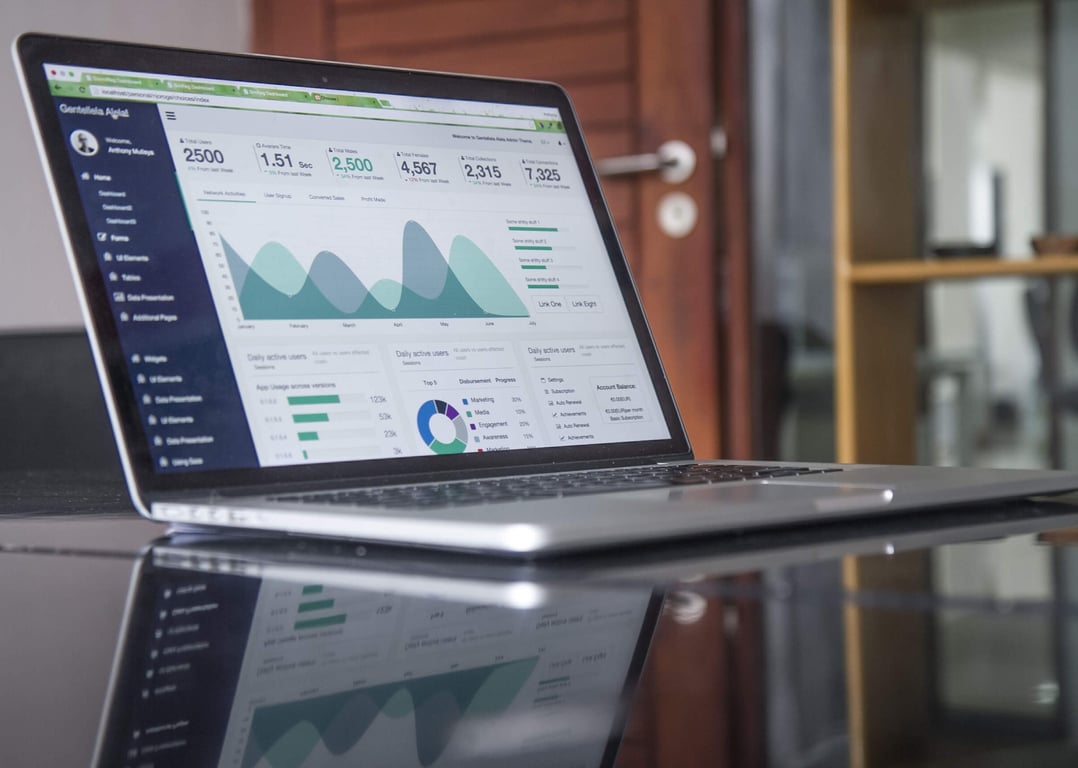
The second project addressed the morning reporting chaos. Each location's POS system emailed a daily sales summary. The owner wanted all nine reports combined into a single readable document with aggregated totals and per-location breakdowns—automatically, before he sat down with his coffee.
The solution used a Zapier workflow to catch each incoming report email, pass the data through OpenAI to extract and normalize the numbers, and compile everything into a single daily summary. The time saved was immediate and measurable: the owner estimated this task had been taking 20–30 minutes each morning across his management team. Eliminated.
A Bigger Platform Shift: OpenTable Across All Nine Locations
While the review and reporting automations were being built, the client made a major operational decision: move all nine locations off their legacy reservation systems and onto OpenTable. This created new automation opportunities, and new complexity.
OpenTable's native features handle reservations, but the owner had a specific vision beyond that: guest re-engagement campaigns based on visit history and spend, automated birthday and seasonal promotions, consolidated performance dashboards across all locations, and a way to catch unhappy guests before their experience became a Google review. He explicitly ruled out a traditional points-based loyalty program—too generic, too expected for the brand level he was building toward.
The Connex team mapped out how OpenTable's API could feed into these workflows: guest data flowing into automation triggers, location performance data feeding into dashboards, and sentiment tracking layered on top of the reservation and review streams. The buildout was scoped to run in phases once the OpenTable rollout was complete across all locations.
What Was Built (and What's Still in the Pipeline)
Completed or actively running:
AI-powered Google review response automation across all nine brands (Zapier + OpenAI)
Daily sales report consolidation—nine location emails → one AI-compiled summary
Metricool unified social media management setup (replacing external agency)
AI phone answering (Sadie) connected through its OpenTable integration for reservation management
In scoping / upcoming:
Guest re-engagement campaigns triggered by visit history and spend (via OpenTable API)
Birthday and seasonal promotion flows
Cross-location performance dashboard (reviews, reservations, response times, sales in one view)
Negative sentiment interception—flagging unhappy guest signals before they reach Google
Estimated Impact
Precise before/after metrics aren't available for all workflows, but the following are grounded in client-stated data and standard hospitality benchmarks:
Morning reporting time: Estimated 20–30 min/day recovered across the management team (client-stated). At a blended management rate of ~$40/hr, that's roughly $5,000–7,000/year in recovered time (estimate; basis: 20–30 min/day × 365 operating days × $40/hr).
Google review response rate: Reviews that previously went unanswered now receive a response within minutes. Businesses that respond to reviews consistently tend to see their ratings improve over time; the exact uplift for this client has not been measured yet.
Social media management cost: Eliminated external agency cost by moving to in-house creative director + Metricool. Cost delta not provided by client.
The Restaurant Automation Pattern Worth Noting
Multi-location hospitality operators face a specific version of the AI adoption problem: the pain is real and the ROI math is obvious, but the automation surface area is enormous: reviews, reservations, daily ops, guest retention, staff communications, marketing. Starting everywhere means finishing nowhere.
What worked here was the sequencing: start with the highest-volume, lowest-risk automation (review responses), prove the model, then expand to more complex workflows as platform infrastructure (in this case, the OpenTable migration) caught up. Adding a dedicated project manager as a single point of contact kept the later phases moving.
For restaurant groups facing similar complexity: the question isn't whether AI can help. It's which problem you solve first, and whether you have a consultant who can tell the difference between a quick win and a six-month project.
Get help sequencing your restaurant automation
Most multi-location groups we talk to have the same problem this client had: plenty of things worth automating and no clear first step. Book a ZoomFlow session and one of our consultants will map your stack with you, pick the quick win, and start building it on the call.
A compounding supplier moved 7,000 formulas into a structured Airtable library with automated PDFs, then added member analytics across Xano, Stripe, and Retool.
A 30-person cabinet and countertop company swapped a macro-heavy sales spreadsheet for an Airtable bid form, AI-built PandaDoc contracts, and a Pipedrive sync.
An HVAC company lost in-app card processing. Zapier now sends ServiceTitan customers and invoices to Stripe as drafts, ready to charge, with no re-typing.