When Custom Orders Break the Human Brain: How a Colorado Door Maker Built a Production System That Actually Scales
A Colorado cabinet door manufacturer producing 550–600 doors/day replaced paperwork-based tracking with an automated lot planning and conflict detection system.
Industry: Manufacturing (custom millwork) | Size: Small manufacturer, ~15–30 employees | Location: Colorado, USA | Engagement: Production Management System build (Allmoxy → Bubble), April 2021–May 2022 | Format: Tier A
The production floor was running at 550–600 custom cabinet doors a day. Every door was different—different styles, different edge profiles, different dimensions. And the only system keeping track of each one's special requirements was the person reading the paperwork."
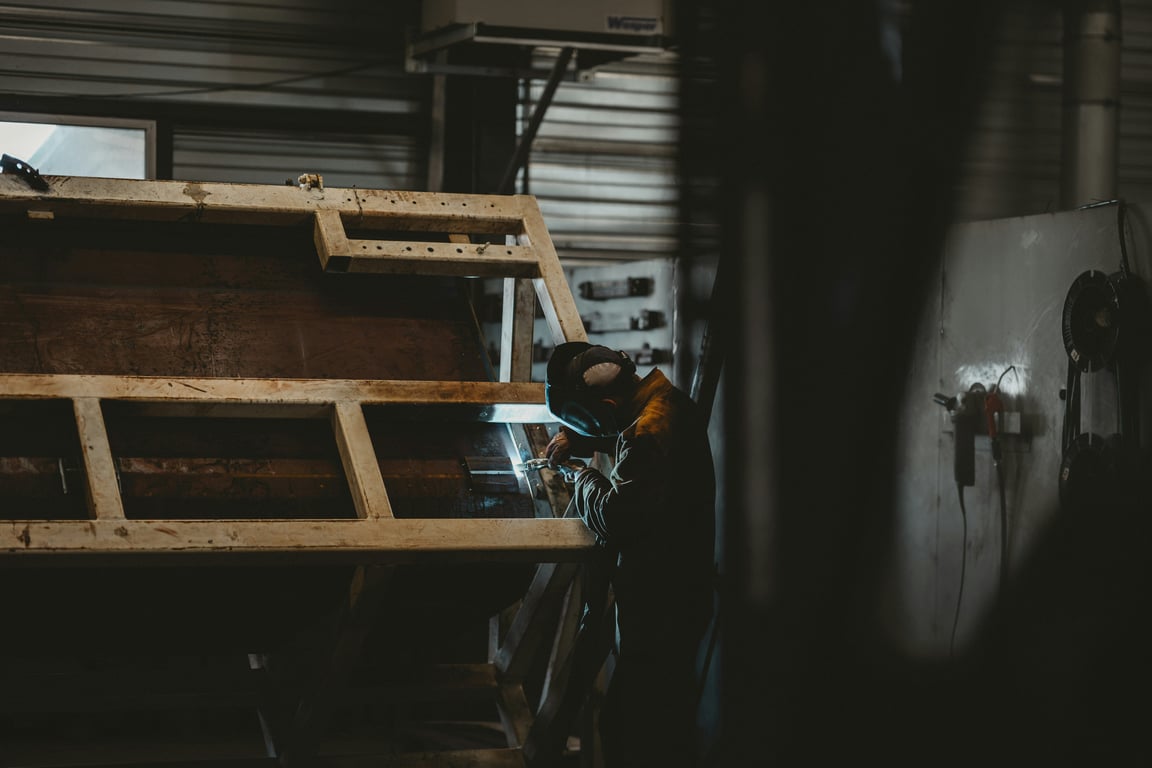
Photo by Catgirlmutant on Unsplash
"The human mind cannot keep stuff in their head," the owner told us on the first call. Customizations were getting missed. A door would reach the end of the line and someone would realize the edge profile was wrong, or the finish didn't match the order. By then, you've already cut it.
The Problem: Complexity That Doesn't Fit in a Head
This Colorado manufacturer was already using Allmoxy—a purpose-built ERP for cabinet and door shops—for order entry, catalog management, and QuickBooks syncing. Allmoxy handled the catalog well. What it didn’t do was production scheduling.
The gap was in lot planning: grouping verified orders into production lots, scheduling those lots against truck departure dates, and catching conflicts before a batch was released. At 550–600 doors a day and 9,000–12,000 orders per week going to a single region (like the Kansas route, which follows its own Tuesday/Thursday truck schedule), manually coordinating releases was a full-time cognitive load.
The math was unforgiving: 12 lots released per day, each containing 44–50 doors, with every release tied to a ship date that traced back to a truck route. If a Kansas truck leaves Thursday, the lot needs to be ready by Monday (three production days of lead time). If the shop had 12,000 Kansas orders that week and only capacity for 9,000, someone needed to catch that conflict and reroute "front range" lots to make room—before anything was cut.
Nobody had a system for that. They had spreadsheets, memory, and the paperwork.
Why Off-the-Shelf Didn't Work
The owner had spent time researching options before reaching out to Connex. The scheduling logic they needed—lot sizing based on shipping method, weekly vs. daily truck frequency, release-date calculation from truck departure, capacity conflict detection—wasn't something Allmoxy offered natively, and there was no off-the-shelf add-on that combined all of it.
More importantly, any solution had to stay in sync with Allmoxy as the source of truth. Verified order status, lot assignments, and invoice routing all needed to flow back through Allmoxy—without requiring manual re-entry.
What Was Built
The Connex team designed a three-layer system:
Allmoxy as the source of record — verified orders, catalog, QuickBooks sync (existing, unchanged)
A production management layer built in Bubble — the “pool” where verified orders waited for lot assignment, with scheduling logic keyed to shipping method, truck departure dates, and route-specific lead times
A settings and alert layer — a configurable map of every shipping method (weekly vs. daily, truck leave date, production lead time), plus automatic conflict notifications when lot sizes or ship-date capacity limits were breached
The system understood that Kansas routes ran weekly, that trucks leaving Thursday meant a Monday release deadline, and that a given week's Kansas backlog couldn't exceed shop capacity without bumping other lots. When conflicts were detected, it flagged them—so a coordinator could make a decision with information, not discover the problem after cutting had already started.
The lot release workflow connected back to Allmoxy: once a lot was finalized, orders printed in Allmoxy and invoices routed automatically. The human still made the final call on releases—the system's job was to surface conflicts before anyone made a costly mistake.
The Engagement: More Iterative Than Most
This wasn't a two-week project. The first discovery call happened in April 2021. The contract was signed in September 2021 after the client spent several months getting Allmoxy configured the way they needed it. Then came a multi-month build, multiple rounds of refinement meetings (October through February), and a launch call in May 2022.
That timeline reflected the complexity of the scheduling logic—and the fact that the client came in knowing exactly what they needed. The intake note from the very first call put it plainly: "We make 500 doors/day. Complexity in the doors. The human mind cannot keep stuff in their head." That clarity made the scoping tractable even when the logic wasn't simple.
Estimated Impact
⚠️
The figures below are estimates derived from operational data shared during the engagement. They are not verified post-project measurements.
Avoided rework: At 550–600 doors/day, custom door manufacturing carries real rework risk when specifications are missed—a miscut door in this industry typically means $40–80 in materials and 25–40 minutes of shop labor. If automated lot coordination and release conflict detection eliminated even 1–2 misbuilds per day (a conservative estimate given the explicit call-out of missed customizations), that's roughly $60–160/day avoided, or an estimated $15,000–$40,000 per year in rework cost.
Planning time reclaimed: With 12 lots released per day and manual planning previously requiring an estimated 8–12 minutes per lot to cross-reference ship dates, truck routes, and capacity, automated scheduling reclaimed roughly 1.5–2 hours of coordinator time daily. At $20–25/hr, that's an estimated $10,000–$13,000/year in reclaimed labor.
Combined conservative estimate: $15,000–$30,000/year in avoided errors and reclaimed scheduling time—against a one-time build cost in the low four figures. The operational gain isn't in a single dramatic before-and-after moment; it's in the accumulated weight of a hundred small decisions that are now made with accurate information rather than memory and hope.
What This Tells a Prospect
If your business runs on custom orders at volume—whether that's cabinet doors, made-to-order goods, or any production environment where every job is slightly different—the paperwork problem doesn't scale. Humans are not good at holding 500 unique specifications in memory simultaneously. Systems are.
The challenge in this type of engagement isn't finding a tool. It's building scheduling logic that understands your specific business rules—your routes, your truck frequencies, your lead times, your capacity constraints—and surfaces conflicts before they become cuts. That logic lives in the gap between your ERP and your shop floor. And it can be built.
Build a Production System That Actually Scales
If you’re managing custom orders at volume and relying on memory and paperwork to keep specifications straight, you already know what breaks. The solution isn’t working harder—it’s building the logic that holds the rules so your team doesn’t have to. Connex builds production management systems for manufacturers and custom-order businesses. Book a free discovery call and let’s figure out what yours would look like.
Build an estate operations platform in Notion + Microsoft 365. Use phased workflows for SOPs, work orders, reporting, and (later) QuickBooks and Power Automate.
A NYC performing arts nonprofit was running its operation across 10+ disconnected tools. Here's how they automated proposals, invoicing, and client intake.
A small diagnostics company automated bill-of-materials inventory in Airtable, eliminating manual lot lookups and building a compliant audit trail. Here is how.