How a Mid-Sized Countertop Manufacturer Replaced Their Status-Inquiry Phone Queue with an AI Voice Agent
How a mid-sized countertop manufacturer replaced their inbound status-inquiry phone queue with an AI voice agent connected to Moraware. Read the case study.
One-line answer: A ~200-person custom countertop manufacturer integrated a voice AI agent with their job-management ERP, letting customers look up installation dates and transfer to the right team — without touching a live rep.
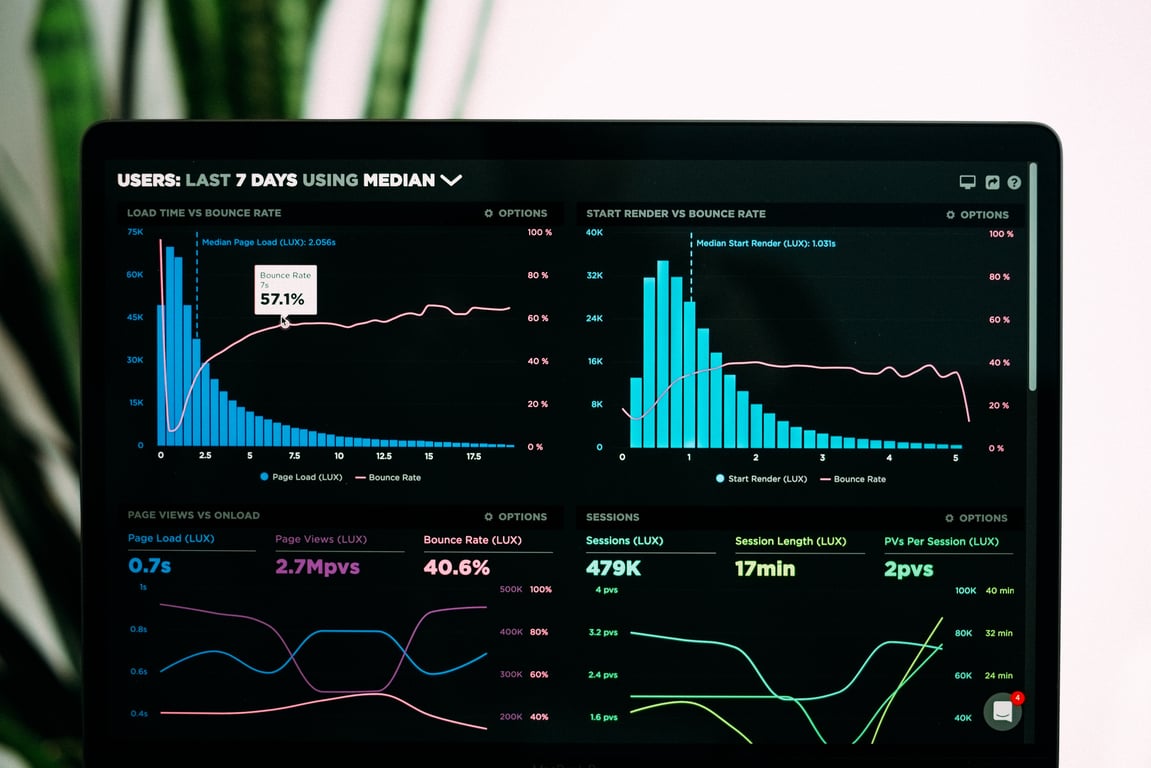
Photo by Julian Hochgesang on Unsplash
The Situation
A mid-sized countertop fabricator and installer in the Midwest serves major retail home-improvement chains — big-box stores whose purchase orders generate hundreds of active jobs at any given time. Their customers call to check installation dates, get scheduling windows, report issues, and request rescheduling. The operations team is good at the physical work. The inbound call queue was the bottleneck.
Their job-management system — Moraware, an ERP purpose-built for countertop shops — held all the relevant data: job status, measurement and installation dates, scheduling windows. The system didn’t have a customer-facing interface. Every status question came through a human.
Stack going in: Moraware (ERP), RingCentral (phone system), no chatbot or voice agent of any kind.
The Problem (In Their Words)
When the owner and CFO joined the initial call with Connex, the framing was direct: they wanted to give customers a “world-class experience” while “lowering pressure on the customer service team.”
The pressure was real. The CS coordinator — and the broader team — fielded a constant stream of inbound calls that were purely transactional: What’s my install date? What’s my two-hour window? Who do I talk to about a remake? These calls didn’t require judgment. They required a lookup.
The leadership had just completed an internal AI boot camp and came in knowing the direction they wanted to go. What they needed was someone to build it.
What They’d Already Tried
The owner had already explored the idea of a Moraware–Zapier API connection before engaging Connex. He’d reached out to Moraware’s development team directly and even looped in a Zapier contact, trying to find a native integration path. There wasn’t one — at least not a clean one.
The Moraware API returns data in XML, not JSON. The data structure for job records and activities is deeply nested. Without someone to parse, reformat, and serve that data reliably to an AI agent, the chatbot and voice-agent idea stayed theoretical.
What We Built
The Connex team spent 13 months building a layered customer-service AI system that connects Moraware’s job data to an IVR-integrated voice agent. The system went through four distinct phases.
Phase 1: Knowledge Base Chatbot (Jun–Jul 2025). The initial scope was a chat agent that could answer questions using uploaded SOPs and job-form documentation. The team established access to both the automation platform and Moraware, identified the initial retail partner’s job documentation as the first training set, and explored API options. The Moraware XML API proved more complex than expected — reverse-engineering it took several sessions.
Phase 2: ERP Integration via N8N (Aug–Sep 2025). After the API was mapped, the team moved to N8N to handle the XML → JSON conversion and data retrieval. They built API calls that pulled 400–500 job records per refresh and implemented a memory system that loaded the latest job data into an OpenAI assistant at the start of each customer interaction. A key guardrail: the system was restricted to returning data only for the specific customer in contact — no cross-customer data exposure.
Phase 3: Voice Agent + RingCentral IVR (Dec 2025–Feb 2026). The most complex phase. The team integrated a voice synthesis platform (11 Labs) and built an IVR menu option in RingCentral that routes callers to the voice agent. The agent handles job-status lookup by name, phone, or email; delivers installation dates and scheduling windows; and transfers to the scheduling queue, remakes/repairs queue, or main number based on caller request.
Phase 4: Live Testing + Launch (Mar–6Jun 2026). The team ran structured live-test sessions with five CS team members making real calls to the bot. Issues surfaced and were fixed in real time: search tool errors causing the agent to hang, incorrect transfer routing, status label mismatches, and a concurrent-call ceiling (resolved by enabling 11 Labs' burst feature, raising simultaneous capacity 3×). The system went live on the IVR in April 2026.
Tech stack built: Moraware API → N8N (XML → JSON pipeline) → OpenAI Assistant → 11 Labs voice synthesis → RingCentral IVR → call-transfer routing to live queues.
The Results
The voice agent now handles inbound job-status calls without a live rep. Customers who call the main number and select the scheduling option are greeted by the AI, authenticated by name or phone number, and given their installation date and scheduling window — or transferred to the right queue — without waiting for a human.
Estimated impact: The CS coordinator and team described status-inquiry handling as the primary daily pressure point. With a five-person CS team fielding these calls across a high-volume installation schedule, a Connex consultant estimated status-inquiry handling at 15+ hours per week across the team. Deflecting the majority of those calls to the voice agent represents an estimated recovery of 10–15 hours per week of CS capacity — approximately $23,000–$35,000 per year at a blended $45/hr labor rate.
Estimated impact, based on the client’s described CS team size and workload characterization, and a blended $45/hr labor rate.
Beyond the hours: the CS team can now focus on calls that actually require judgment — remakes, damaged materials, scheduling conflicts — rather than status lookups. The owner’s goal of a world-class customer experience without adding headcount has a concrete mechanism behind it.
Client Voice
The owner came to the first call with a clear mandate: they’d just put the whole leadership team through an AI training program and were ready to move. What they articulated — wanting to deliver “world-class” service while reducing pressure on the CS team — drove every design decision over 13 months of build work.
By the final testing phase, the CS coordinator and four colleagues were placing real calls to the system and giving direct feedback on agent behavior. That level of hands-on client involvement is what makes a voice AI system actually work in production.
Frequently Asked Questions
Will this work if our ERP doesn’t have a clean API?
It might still be possible. The Moraware API returns XML — not the clean JSON most automation tools expect. The Connex team reverse-engineered the data structure and built a conversion layer using N8N. If your system has any API or export option, there’s usually a path. The question is what it takes to make that data agent-ready.
How long before customers can actually use it?
The first working chatbot prototype was demonstrated in the third session — about six weeks in. The full voice-agent IVR rollout took 13 months, but that included building the ERP integration from scratch, navigating a complex phone system (RingCentral SIP trunking), and running extended live-user testing before launch. Simpler stacks get to production faster.
What access did the project require?
Moraware login (for API credentials), the RingCentral admin account (for IVR configuration), and access to the N8N automation environment. The client’s CS team participated in testing — five people making real calls to the system during live check-in sessions.
What happens when the bot can’t answer?
The system is built to transfer. If the voice agent can’t find the job record or the caller requests a human, it routes to the appropriate call queue (scheduling, remakes/repairs, or general). No calls fall through — dead-end handling was specifically engineered during the testing phase.
Ready to stop routing status questions through your CS team?
If your business handles high-volume inbound calls that are mostly lookups — order status, appointment windows, job updates — there’s likely a version of this system that fits your stack. Book a call to walk through it.
Set up an AI answering service that logs calls, captures lead details, and triggers CRM follow-ups with Zapier. Includes requirements and a starter build plan.
A NYC performing arts nonprofit was running its operation across 10+ disconnected tools. Here's how they automated proposals, invoicing, and client intake.